Publié le 16/07/2025, mis à jour le 06/03/2026
Feasibility study for an electric vehicle charging infrastructure on the island of Saint-Barthélemy
-
Context
The development of electric mobility in an island environment such as Saint Barthélemy is both a risk and an opportunity. Indeed, the wrong technological choices, particularly in terms of recharging infrastructure (fast recharging, connected to the grid, etc.), would jeopardize the integrity of an electrical system that is inherently more unstable than on the mainland, due to its insular nature. Conversely, the right technological choices can make electric mobility an essential lever in the Energy Transition.
-
Stakes and objectives
The overall aim of the project is to perform a technical-economic, legal and institutional feasibility study for the deployment of public charging infrastructure for electric vehicles. This deployment is also envisaged in a "vehicle-to-grid" (V2G) logic, adapted to the island context. The assignment also enables us to assess the impact of electric vehicle deployment on the territory in terms of skills requirements and lithium battery waste production.
-
Stakeholders involved
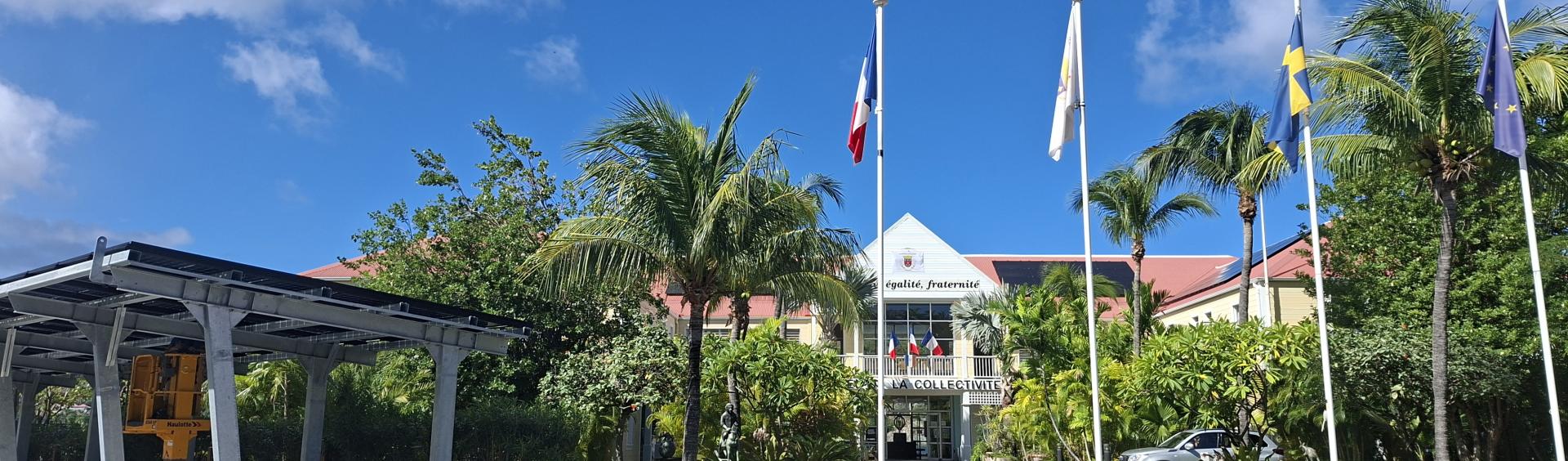
The collectivité de Saint-Barthélemy. Consultations with EDF-SEI, Ouanalao Environnement, and territorial economic players (car/scooter rental companies, PV installers, hotel and tourism players)
Facility description
The following activities were carried out:
- Definition of a regulatory, technical and organizational framework for the development of Electric Vehicle Charging Infrastructures IRVE and electric vehicle battery waste management adapted to the constraints and needs of Saint Barthélémy
- Development of a current and prospective inventory of lithium batteries present on the island, to enable the impact of the development of electric mobility on the island's waste management network to be estimated now
- Concerted elaboration of a territorial strategy for the development of IRVE
-