

Publié le 01/12/2025, mis à jour le 01/12/2025
The Green Overseas Programme at COP30: Innovation and Collaboration to Build Climate-Resilient Futures for OCTs
-
How can Overseas Countries and Territories (OCTs) redesign financial and governance systems while facing the realities of climate change first-hand? As COP30 progressed in Belém do Pará, OCTs’representatives, experts, and policymakers converged to address this pressing question. The world's attention turned to the monumental task of delivering the $1.3 trillion in annual climate finance needed for developing nations. Yet, for the Sub-National Island Jurisdictions (SNIJs), systemic flaws in the global financial infrastructure leave them uniquely vulnerable. -
-
Ahab Downer,Green Overseas (GO) Programme Director, exposed the paradox with striking clarity: the funding available for climate resilience and energy transition in Sub-National Island Jurisdictions (SNIJs) and Overseas Countries and Territories (OCTs) "is grossly insufficient." Many Overseas Countries and Territories (OCTs) are politically linked to developed nations and often perceived as wealthy. Yet, their financial reality reflects uncertain local budgets and direct exposure to climate risks.
The Green Overseas (GO) Programme plays a central role in supporting 25 European and British Overseas Countries and Territories. Through the participation of its representatives at COP30, the programme reaffirmed its commitment to strengthening OCT resilience by addressing financial gaps, advancing mobility-sensitive adaptation, and developing tailored mechanisms that reflect the specific realities of small island territories. In dialogues alongside CARICOM, UN Migration, the Government of the British Virgin Islands and other partners, GO contributed clarity and practical innovation to a rapidly evolving global debate on island resilience.
-
"The Caribbean has long been a champion of resilience, facing hurricanes and eruptions with strength that inspires the world. Through the Green Overseas Programme, we amplify these voices and connect Europe with its Overseas Countries and Territories"
said Jérémie Pellet, Expertise France’s CEO during the session titled “Youth Mobilization: From Local Action to Global Influence", that took place at the CARICOM Pavilion on November 12. At the same session, youth advocates from the Cayman Islands, Curaçao, Anguilla and Mayotte took the stage to showcase youth-driven climate adaptation, advocacy, and justice initiatives — and identify pathways to amplify OCT youth influence in international climate policy.
-
Island Solutions for Climate Mobility
In "Resilient by Design: Island Solutions for Climate Mobility," Nicholas Chenet, Expertise Frances’ Sustainability Director stressed that climate adaptation cannot be treated as an emergency response. Sea-level rise, saltwater intrusion, and intensifying storms are predictable pressures. The question is how OCTs will seize the opportunity to lead by engaging in deliberate planning, ensuring their communities flourish, and proactively securing a future where displacement is successfully avoided.
-
Chenet highlighted that resilience must start with intentional, inclusive planning. He also emphasised the importance of blending traditional knowledge systems with modern engineering and policy frameworks. In several island regions, local architecture and locally developed risk-management practices have long helped communities adapt to and cope with extreme weather. When combined with scientific modelling, modern building standards, and climate projections, these approaches offer scalable pathways for adaptation.
Central to the conversation was the idea that technical solutions alone won't ensure resilience. Instead, durable adaptation requires strong governance, predictable finance, and genuinely participatory processes. Island communities, especially youth, and local authorities, must have agency in shaping the development decisions that determine whether they can remain on their lands with dignity. Without that agency, adaptation risks replicating top-down development models that have historically failed island communities. This approach is more than technical design; it is a matter of social justice.
-
Building Financial Pathways for Climate-Resilient Island Futures
The session titled “Building Financial Pathways for Climate-Resilient Futures in Islands,” brought the discussion from planning to financing. Chenet walked through the practical barriers that prevent island projects from reaching "bankable" status.
Global climate funds require feasibility studies, regulatory assessments, and technical designs before releasing capital. Yet OCTs and many Sub-National Island Jurisdictions lack the in-house capacity to produce these materials. Projects stall not because they're unviable, but because they can't meet the bureaucratic thresholds funders demand.
Chenet underscored a reality long known to island territories: vulnerability does not automatically translate into access to climate finance. For Small Island Developing States (SIDS) and OCTs, the cost of adaptation is rising exponentially, yet access to funds remains slow and fragmented. Many OCTs are caught in an institutional gap; attached to high-income countries yet lacking specialised support and direct eligibility for major global climate funds.
Chenet outlined emerging financial models gaining traction in overseas regions:
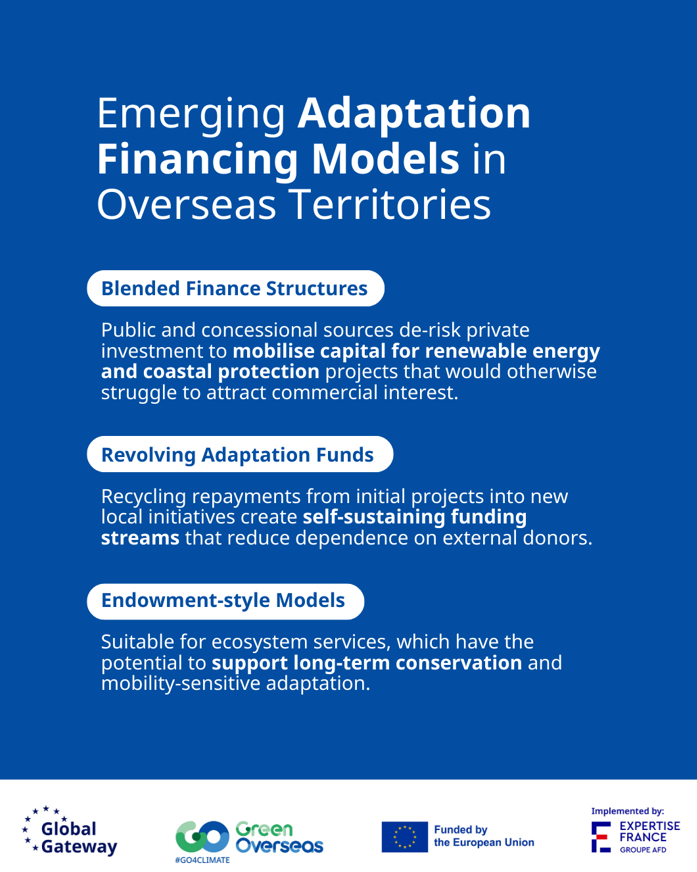
- Blended finance structures, where public and concessional sources de-risk private investment, are mobilising capital for renewable energy and coastal protection projects that would otherwise struggle to attract commercial interest.
- Revolving adaptation funds, which recycle repayments from initial projects into new local initiatives, create self-sustaining funding streams that reduce dependence on external donors.
- Endowment-style models for ecosystem services, which have the potential to support long-term conservation and mobility-sensitive adaptation.
In Anguilla, the GO Programme financed the mapping, climate impact analysis and decision-making tools for water security. Speaking of water, the Programme also funded an agrovoltaic pilot in Sint Eustatius combining solar energy, rainwater harvesting, and experimental crops.
The Programme has focused on strengthening Aruba’s energy sector by providing technical assistance to reinforce its regulatory framework to better enable renewable energy investment; advancing eco-construction in Wallis and Futuna by supporting the development and promotion of environmentally friendly building techniques; and contributing to climate resilience in French Polynesia through a 30-year coastal evolution study launched in April 2025.
Financing is not only about bringing more money into islands; it is about designing structures that give territories control over their future. Effective governance, transparent institutions, and regionally coordinated systems were highlighted as the cornerstones of resilient financial ecosystems.
-
“The Green Overseas Programme promotes cooperation between island territories facing similar challenges in climate resilience and ecosystem protection. By connecting actors and sharing proven solutions, we help territories avoid ‘reinventing the wheel’ and accelerate the implementation of effective actions.” - Nicolas Chenet, Expertise France -
A Closer Look at the GO Facility
Part of the GO Programme's work is delivered through the GO Facility, a mechanism allowing each beneficiary territory to submit up to two strategic climate proposals. The Facility is deliberately flexible and highly targeted, designed to adapt to the specific needs of small jurisdictions while aligning with national or territorial priorities in the dimensions of energy transition and climate resilience.
- Energy Transition
GO Facility actions can support the strengthening of public policies and regulatory frameworks, the integration and storage of renewable energy, and improvements in energy efficiency across buildings and public infrastructure. It also supports e-mobility and carbon-free transport solutions, which are particularly challenging for OCTs due to high logistical and financial barriers.
- Climate Resilience
On the climate resilience dimension, the GO Facility addresses structural needs, including coastal zone management, climate-resilient water resource systems, and the development of food systems that can withstand increasing climate volatility. Importantly, the Facility supports public-sector capacity building, ensuring that OCT administrations are better equipped to manage risks, plan long-term adaptation, and engage strategically with external funders.
The GO Facility enables the transition of projects from concept to implementation, providing the necessary policy alignment and technical support to attract investment. This mechanism transforms isolated initiatives into structured, scalable actions tailored to island contexts.
GO Communities in Action
Islands advance faster when they collaborate and exchange knowledge. GO Communities are developed to foster collective learning and fruitful exchanges among OCTs. Despite their diversity, many overseas territories share constraints related to scale, finance, capacity, and geography. By bringing territories into dialogue, the Green Overseas Programme builds bridges that help standardise solutions, replicate successful models, and develop joint strategies.
This collaborative model, central to the GO Programme’s approach, ensures that expertise generated in one territory can be quickly shared with others. Workshops, regional exchanges, and capacity-building missions, part of the GO Communities, create momentum that extends beyond individual projects, fostering a lasting impact.
The activities carried out within the GO Communities meet a triple imperative:
- Address issues and needs common to most OCTs
- Generate added value at the regional and interregional level
- Produce useful and applicable results at the territorial level, in order to generate immediate and tangible impacts for each OCT
At COP30, this collaborative spirit was evident as territories compared approaches to climate mobility, governance, and innovative finance.
What COP30 Reinforced
The discussions demonstrated that islands are not passive recipients of global climate decisions. Rather, they are innovators who bring valuable models to the global resilience agenda. With tools such as the GO Facility, robust regulatory support, and tailored technical expertise, OCTs can design financial and governance systems that respond directly to their unique realities.
As COP30 puts climate finance, adaptation, and mobility at the forefront, the Green Overseas Programme continues to help the OCTs shape policies, implement solutions, and access the funding required to safeguard the future of overseas territories. The message from Belém is clear: when islands are equipped with the right mechanisms, they can set a leading example. Resilience is built through locally anchored innovation.
-
Nos autres actualités
Voir toutes les actualités-
Atelier GO en Polynésie : renforcer des systèmes alimentaires résilients au changement climatique
-

La Première Ministre de Sainte-Hélène met en avant les priorités climatiques de l’île sur la BBC en amont de la COP30
-
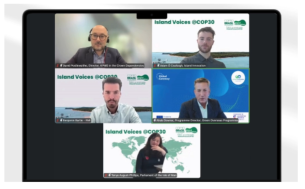
Renforcer la résilience des îles : Financer l’avenir des Pays et Territoires d’Océan
-
UNFCCC à la COP : donner une voix aux territoires insulaires
-

Nu’u Moana : comprendre l’évolution du littoral à Mahina et accompagner l’adaptation
-

Lancement de l’atelier GO ETC à Statia : accélérer l’intégration des énergies renouvelables dans les réseaux insulaires
-
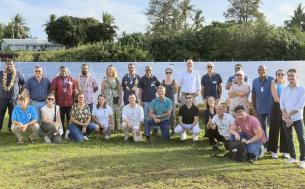
Retour sur l’atelier régional sur la transition énergétique à Wallis-et-Futuna
-
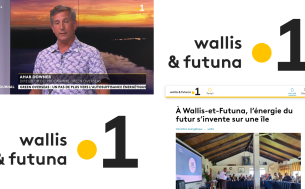
L’atelier à Wallis-et-Futuna au cœur de l’actualité locale
-
Atelier régional sur la transition énergétique | Wallis & Futuna