Publié le 07/07/2026, mis à jour le 07/07/2026
GO NEWSLETTER #3 From Action on the Ground to to European Momentum
-
This issue highlights another important milestone for the Green Overseas Programme, showcasing practical solutions for clean mobility and food security in OCTs, to strategic discussions at the OCTs–EU Forum in Aruba, while preparing for its final capitalisation workshop in November 2026.
-
-
A Climate and Energy Label to Help Consumers Choose Their Vehicle in New Caledonia
The Green Overseas Programme team, in collaboration with the New Caledonia Directorate for Industry, Mines and Energy (DIMENC), is pleased to announce the completion of the vehicle climate and energy labelling scheme.
New Caledonia is firmly committed to the energy transition through the ambitious objectives set out in STENC 2.0 (New Caledonia's Energy Transition Roadmap), particularly in reducing energy consumption and territorial greenhouse gas emissions. The development of more energy-efficient and low-carbon mobility is at the heart of this transition, supported by strong policies promoting electromobility and cleaner, more efficient vehicles.
The vehicle climate and energy labelling scheme is designed to provide consumers with a simple and transparent source of information, helping them make informed decisions when purchasing a vehicle. The New Caledonia Climate and Energy Label has been developed to clearly communicate the energy and climate impacts of different vehicles. -
How to Read the Label?
The label provides the following information:
1. Vehicle identification : the vehicle's make, model and version, the type(s) of energy or fuel used, and its curb weight (kg).
2. Combined energy consumption (litres/100 km and/or kWh/100 km): The estimated consumption is based on data for comparable vehicles from the European Environment Agency's databases.
3. Operating costs (in XPF/year) and annual emissions (in metric tons of CO2 equivalent/year): These estimates are based solely on energy consumption, assuming an average annual driving distance of 10,000 km under normal driving conditions and the average annual price of the energy sources used.
4. CO₂ emissions (in g/km)
5. An energy-climate class: A colour-coded scale ranging from A (most energy-efficient and lowest emissions) to G (highest emissions)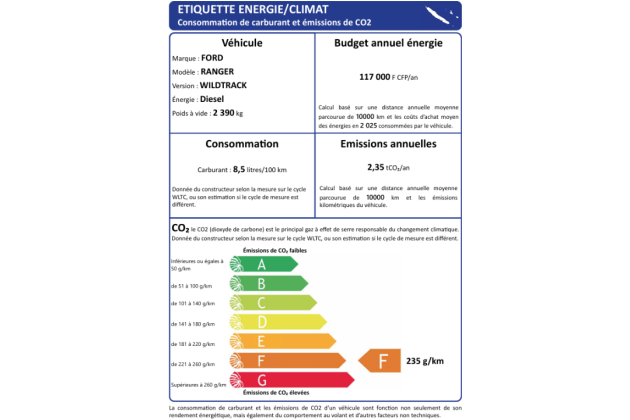
-
This initiative is part of the GO Programme and was launched at the initiative of the Government of New Caledonia. The successful implementation of the project was entrusted to the consortium comprising CITEPA and the New Caledonia Quality Institute (Institut de la Qualité de Nouvelle-Calédonie).
-
Ascension Island is Stepping Up Its Food Security Strategy
Following the food security assessment conducted by the consulting firm K-Ora, published in December 2025, a field mission took place from March 23 to 27, 2026 to turn the report’s findings into concrete courses of action aimed at strengthening Ascension Island’s food resilience.
-
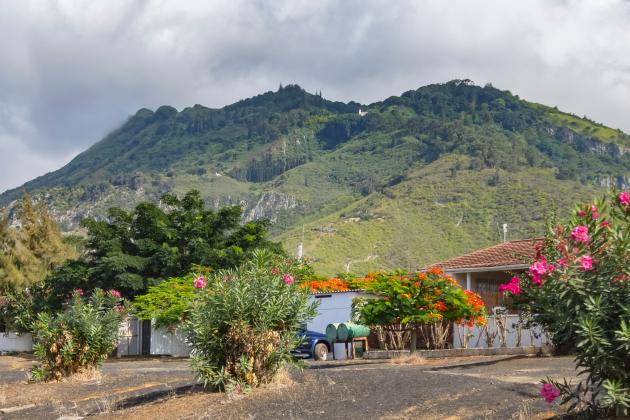
Bringing together government representatives, key stakeholders on the island, and community members, this week of consultations and workshops provided an opportunity to explore several key issues related to food self-sufficiency : water management, agriculture, hydroponics, fishing, retail, and the organization of the food supply chain. The discussions helped forge a shared vision of priorities, based on local realities and the island’s environmental constraints.
-
For Iciar de Liniers Solano (K-Ora), this mission confirmed that food security goes far beyond the agricultural issue alone:
One of the key lessons from this mission is that food security on Ascension Island, as elsewhere, is not merely an agricultural challenge, but a broader systemic issue involving logistics, water, health, governance, and social resilience. What particularly struck us was the strong commitment of local stakeholders and institutions to work collectively toward concrete and realistic solutions tailored to the island’s unique environmental and operational constraints.
-
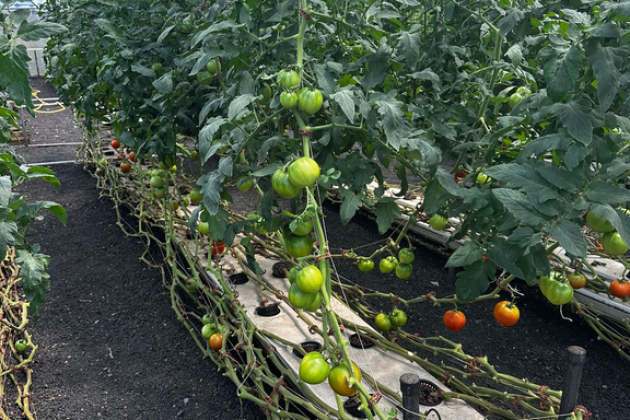
Among the key opportunities identified were expanding hydroponic production, restoring historic agricultural sites, diversifying local food-related activities (poultry farming, food processing, bakery production) and strengthening coordination among the different actors involved in the island's food system.
-
➡️ More details about the field mission: https://www.green-overseas.org/fr/infos-et-medias/retour-sur-la-visite-de-terrain-ascension-lile-accelere-sa-strategie-de-securite
-
Green Overseas at the OCT-EU Forum in Aruba: Strengthening the European Momentum for the GO Programme Ahead of Its Capitalisation Workshop in November 2026
-
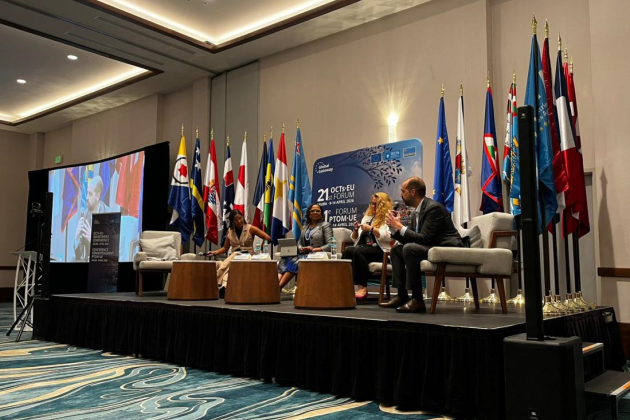
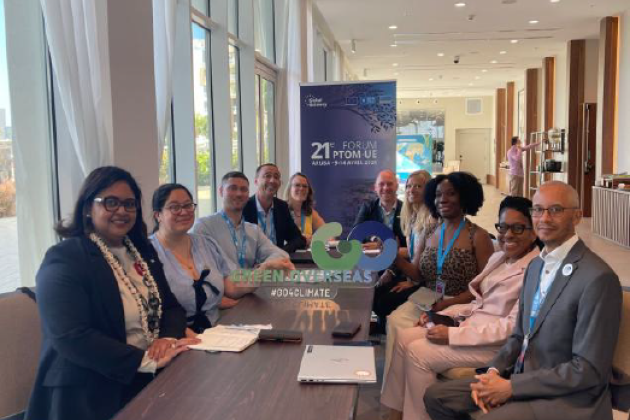
In April 2026, the GO team participated in the 21st OCT-EU Forum held in Aruba. This edition marked an important milestone, with a stronger focus on sustainable investment, regional cooperation and the European Union's Global Gateway strategy.
-
Several OCTs highlighted the tangible impact of the GO Programme, particularly through the GO Facilities projects and the cooperation initiatives fostered between territories. The discussions also confirmed the continued relevance of the priorities promoted by Green Overseas—energy transition (policies and regulations, renewable energy, energy efficiency, ecomobility and low-carbon transport) and climate change resilience (resilient coastal management, sustainable water management and resilient food systems)—which are fully aligned with the European Union's evolving policy priorities.The European Union also announced a significant increase in funding for the OCTs for the 2028–2034 programming period, creating new opportunities for regional-scale projects and partnerships.
-
The Forum further identified several promising avenues for future collaboration between territories, including initiatives on end-of-life lithium battery management and the development of regional projects capable of attracting both European and private-sector financing. Discussions with the Overseas Countries and Territories Association (OCTA) also highlighted strong interest in capitalising on the experience gained through the GO Programme and in maintaining exchanges and cooperation among OCTs beyond the programme.
-
As part of this process, the closing and capitalisation workshop, scheduled for November 2026, will provide an opportunity to review six years of the GO Programme, showcase its achievements, share lessons learned and identify opportunities to scale up successful initiatives in the years ahead.
-
📩 To make sure you don't miss the next newsletter, please contact: emma.bryckaert@expertisefrance.fr
Nos autres actualités
See all news-
Nu’u Moana Project: Field Feedback and Testimonial Collection
-
Media Coverage of the GO Facility in the Cayman Islands
-
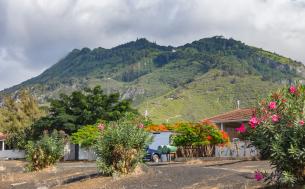
A Look Back at the Field Visit to Ascension: The Island Is Accelerating Its Food Security Strategy
-
Media coverage for Barbados water resilience workshop
-
Strengthening water resilience: OCTs meet in Barbados
-
GO NEWSLETTER #2 From COP30 to peer-to-peer exchanges
-
GO workshop in Polynesia: strengthening food systems resilient to climate change
-

St Helena's First Minister highlights the island's climate priorities on the BBC ahead of COP30
-
Strengthening island resilience: Financing the future of Ocean Countries and Territories